Showing posts with label history. Show all posts

Thursday, January 16, 2020

FIFTH MEDINA COUNTY HISTORY FAIR


It's time again for the Annual Medina County History Fair!


Fifteen of the local history and genealogical organizations will be on hand, displaying their collections and answering your questions about the uniqueness of Medina County.

JOIN US FOR A WONDERFUL DAY OF HISTORY!


Stop by the Library's table and say "Hello!" to Lisa, Lauren and myself!


Thursday, October 10, 2019

Judge Albert MUNSON

Albert Munson as a younger man from the 1881
History of Medina County and Ohio
Judge Albert Munson was a man of many talents and abilities. But his early years were punctuated with very humble circumstances.

Albert was born to Lyman and Nancy (Porter) Munson on 8 Aug, 1829 at River Styx. He was one of 9 children. His parents came to Ohio in 1816 from Massachusetts and were farmers. 

Albert's first attended a log schoolhouse, later studying at the Sharon Academy. The Academy was a product of the Universalists (religion) in the area who were looking for a non-sectarian educational option.

In 1844 while Albert was still a teen, a political speaker did not show up for his speech. Albert volunteered to speak extemporaneously on the duties of citizenship and finished to cheers and applause. He was fascinated by politics from that time forward.

He organized the River Styx Lyceum where debate was prized. He later said that prepared him for his love of lifelong learning.

Around 1850, Albert contracted dysentary. He would complain of  Rheumatism the rest of his life.
Other benchmarks from Albert's long life:
  • Worked 5 years at general store of Allen Howes in Sharon. Then to Colborn & Munson in River Styx. 
  • While working at the store, he married Harriet Easton in 1854. Children followed: Cora E. and Lyman E. 
  • He then farmed his father's homestead. 
  • He worked hard for Republican party throughout Medina County when that party was just getting started in 1856, delivering hundreds of speeches.
  • He was physically incapacitated to serve in the Civil War so he recruited other soldiers. For that service he won an appointment as Colonel of the Militia by Ohio Governor Todd in 1862. 
  • In 1869 he was elected to Ohio House of Representatives. He was re-elected in 187, serving a total of 4 years. He worked on codifying Ohio State laws, which were later copied by other states. 
  • He was a temperance man. 
  • After studying on his own for years, he was admitted to the bar in 1873, although he never practiced as a lawyer.
  • He worked to bring the Railroad to Medina in 1871-72 and continued to support bringing railroads to Medina for the rest of his life. 
  • In 1875 he was elected Director of Ohio Farmer’s Insurance (now Westfield Insurance). 
  • In 1878 he was elected Judge of the Probate Court of Medina County and  “never had decision reversed by the higher courts” 
  • He moved to Medina to be closer to his work. He was a judge for 2, 3-year terms (6 years). He used the honorific title "Judge" the rest of his life. 
  • While he was judge he heard many cases of insanity. From 1880-1881 newspapers:
    • 9 cases appeared in the paper 
    • 5 women and 4 men 
    • 3 of the women were judged insane and all of the men were. 
    • They were sent to the Asylum at Newburgh, OH.
  • After that he bought Samuel Bradley’s hardware business and ran that business for 25 years as A. Munson & Son 
Ad for Sam Bradley's Hardware store
Medina Gazette July 9 1880
Ad for Munson's Hardware store.
They kept their ads simple & focused
on the products. Sometimes, they
referred to the store as "Dad & I"
Medina Gazette, 28 Dec 1899
Advertising heating stove and fine
English China at the same time.
Quite likely, the Munson's furnished
their home with products from
the store. Medina Sentinel
4 Sep 1903, p.4

A sample of the Munson's personal china
on display at the Medina County
Historical Society.


  • He was a member of these fraternal organizations, as well as the Literary Society: 
    • Morning Star Lodge (Masons)  
    • Independent Order of Odd Fellows (I.O.O.F.) 
    • Royal Arcanum, Council No. 372. 
  • He claimed he was personally responsible for William McKinley being elected as President. In gratitude McKinley came to Medina for a speech. After his election, McKinley offered Munson any position he wanted in gratitude for all of Munson's help.  Munson, who was around 70 years old, said being postmaster was good enough. The post office was two doors down from his hardware store. He was postmaster for 6 years. 
Judge Albert Munson
History of the Western Reserve by Harriet Taylor Upton

  • From  1907-1908, he wrote column for Gazette “Reminiscences of a Busy Life” (play on "Recollections of a Busy Life" by Horace Greeley) that described many facets of his long life. 
  • Albert died 27 June 1911 In Medina (Gazette 7-28-1911, p.4)

His spiritual beliefs:

Probably one of the most interesting aspects about Munson was his religious beliefs. He was a Spiritualist. 


"Spirit" Picture of Albert Munson
in the collection of
Medina County Historical Society.
Spiritualism is the belief that the spirits of the dead can communicate with the living, often through the use of seances and mediums. It grew out of the early 1800's in New York. By 1860, it had spread world wide. It was very popular in the 1870's, particularly in the River Styx area where Albert grew up.

In 1879 he attended a (possibly his first?) séance in Sharon. It was thought at the time it had to do with the insanity cases he was hearing as a judge.

Why would the spiritualist church be appealing to Munson at this time?
  • Growth as a movement. Started in US in 1840. Reached its height in popularity from 1880-1920 
  • The Universalist Church might have made him more likely to investigate other ways of worshiping. 
  • He had already lost his parents and siblings:
    • Father Lyman in 1863
    • Mother Nancy in 1850
    • Sister Emeline in 1876 
    • Brother Lyman in 1843 
    • Sister Nancy in 1852 
    • In 1881, he lost his good friend, James Garfield 
    • William McKinley in 1901
  • One of the mediums he used was possibly a cousin on his mother's side.
Munson believed he had a psychic link to McKinley and was convinced that the President would not live out his second term. Visiting McKinley in Canton, Munson urged the president to surround himself with guards, but McKinley replied, "Who would kill me?" Munson left, believing it would be the last time he saw his friend. And it was. McKinley was assassinated on 6 September 1901 .

Munson held a seance in his home, trying to each his friend. During the seance, McKinley remembered all the help Albert had been to his political career, especially the 1885 campaign. Munson invited McKinley's grieving widow to one of the seances, but her doctor soon put a stop to further seances as he felt it was detrimental to her health.

In his obituary it was stated that Munson believed "Death was only an incident in the journey to other scenes." One by one, death took each of the Munsons leaving none from that branch of the family. Each was cremated, a practice that had been revived in the 1870's.

Books from the Munson library:

Held at the Medina
 County Historical
Society
Held at the Medina
County 
Historical
 Society
Letter from McKinley:
Letter written by Wm. McKinley in 1885, before his presidency.
Collection of the Medina County Historical Society.

 Transcript of a seance conducted by  Annie L. Chamberlain, channeling the spirit Electa:


Munson's mother's spirit confirming that Miss Porter is indeed a relative:


Transcription of a seance from 1903.
In the Medina County Historical Society Collection.
The Munson House
Now a private residence, the Munson family lived here until Cora Munson's death in 1956.
Originally it was at 231 East Washington Street. The Community Design Committee moved
the house was to its present location on Prospect in 1985.
Numerous seances were held here.
SOURCES: 
  • Butalia, Tarnunjit, Religion in Ohio: Profiles of Faith Communities  on Google Books: https://bit.ly/33gSDJC
  • Find A Grave
  • King, Joann, Medina County: Coming of Age 1810-1900 
  • Kraynek, Sharon, Recollections of Medina Characters 
  • Medina County Gazette
    • 28 Dec 1899 
    • 9 July 1880
    • 1 May 1997, page C5
    • 27 May 1881, page 7.
    • 29 June 1879, page 11.
    • 11 July 1879, page 3.
    • 21 Dec., 1984
  • Medina County Historical Society Collections.
  • Medina County Sentinel
    • 4 Sep. 1903, page 4.
    • 4 Aug 1911, page 1 
  • Perrin, William Henry, History of Medina County and Ohio (1881)
  • Upton, Harriett Taylor, History of the Western Reserve
  • WikiMedia Commons: https://commons.wikimedia.org/wiki/File:Judge_Albert_Munson_House.jpg
  • Wikipedia:
P.S. Thank you to Tom Hilberg for correcting my mistake. The Community Design Committee NOT the historical society moved the MUNSON House to its present location.


Wednesday, September 25, 2019

Who are they?: The answers to last week's trivia challenge.

And the answers are:

1.William Batchelder - m. Ohio legislator for 40 years.
Read more about his career on this Wikipedia entry: https://en.wikipedia.org/wiki/William_G._Batchelder.
He and his wife, Judge Alice Batchelder, still own a house on East Smith Road in Medina.

William Batchelder
Photo is from a screenshot of a YouTube Video

2. Martin Van Buren Bates - k. A giant among men.
Captain Martin Van Buren Bates was literally a  giant, measuring 7 feet 5 inches tall. He and his wife Anna settled in Seville and became known as The Giants of Seville.

Captain Bates next to an 
ordinary man.
Photo courtesy of Wikipedia.

3. Sylvia Beach - h. Missing Wadsworth girl.
Sylvia was a young woman who went missing in the wild country around Wadsworth in 1823. Read more about her on this blog: https://mcdlgenealogyspot.blogspot.com/2016/08/missing.html 

4. Wilda Bell - q. 1st Black woman on Medina City Council.
Learn more about her inspiring life here:

Photo from Wilda's obituary at Waite & Son


5. Elsie Bennett-Wilson - p. Local library promoter.
Here is more information on this influential Medina woman: https://mcdlgenealogyspot.blogspot.com/2015/03/elsie-bennett-wilson.html

6. H.G. Blake - o. Started Old Phoenix Bank.
 Pick up any Medina history book and you will find entries on H.G. Blake. Starting the Old Phoenix Bank was just one of his accomplishments. Read more about his life: https://mcdlgenealogyspot.blogspot.com/2017/04/hg-blake.html

Old Phoenix Bank, undated, from Bob Hyde's Beyond the Storefronts web site.
The bank was one of the first buildings constructed after the 1870 fire that destroyed much
of uptown Medina. It rose from the ashes like a Phoenix. It was a Medina landmark
for well over 100 years until the bank was sold first to First Merit and later to Huntington Banks.

7. John W. Brown - a. Ohio Governor from Medina.
Sure, he was only Governor for 11 days, but he didn't let that slow him down! Here's more info: https://mcdlgenealogyspot.blogspot.com/2017/03/medinas-governor.html and on Wikipedia: https://en.wikipedia.org/wiki/John_William_Brown

8. Peter Cherry - c. Medina historian and author.
Almost forgotten now, Peter Cherry was once the go-to person for Medina and Summit county history. He wrote The Western Reserve and Early Ohio (1921) and The Portage Path (1921) and this article from The Medina Gazette:


Medina County Gazette 9 August 1935, section 2, page 3. Article by
P. (Peter) P. Cherry, 
a local Medina historian.
Cherry inflated the number of troops involved.

9. Sidney Fenn - t. Medina Educator and Principal.
The Fenn Elementary School is named in his honor. Learn more about him at: https://mcdlgenealogyspot.blogspot.com/2017/09/who-was-sidney-fenn.html

10. Rufus Ferris - r. Pioneer & land-sales agent.
Rufus was the land agent for Elijah Boardman, who owned most of Medina Township. He tragically died while trying to save others' lives during a cholera epidemic. Learn more here: https://mcdlgenealogyspot.blogspot.com/2017/06/rufus-ferris-medina-pioneer.html

Historic marker outside the house that Ferris built on what is now
North Broadway
11. Michael Foreman - l. NASA astronaut.
Who knew Medina County boasted their own NASA astronaut? Friends and family of Michael Foreman who grew up in Wadsworth.  Read about his career on Wikipedia here: https://en.wikipedia.org/wiki/Michael_Foreman_(astronaut)

12. William D. Frazier - w. Historic marathon walker.
Confession time - I forgot who William Frazier was, even though I wrote this blog about him:
https://mcdlgenealogyspot.blogspot.com/2016/06/william-bill-frazier-medina-legend-you.html

13. Sadie Green - e. An early Medina health nurse. Just not the first!
Often listed as Medina's first county health nurse, Sadie Green held that position from 1924 to 1935. Two other women were Medina Health nurses before her: Constance Hanna, 1920-1922, Miss Musse, 1922-1924. Read more about Sadie's life in this blog: https://mcdlgenealogyspot.blogspot.com/2015/03/sadie-green.html


14. Letha House - j. Medina benefactress.
The Letha House Foundation has donated to numerous worthy causes in Medina County. If you want a short account of her rags to riches story, check out this blog: https://mcdlgenealogyspot.blogspot.com/2016/12/letha-e-house.html
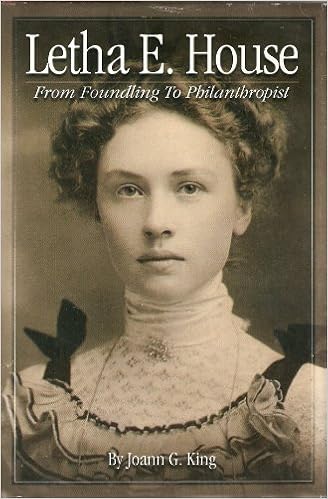
For a thorough examination of her life, I can highly recommend this book by Joann King:
https://search.clevnet.org/client/en_US/me-main/search/results?qu=letha%20house&te=

Local author, Joann King wrote this imminently readable
account of Letha's life.

15. Sophia Huntington-Parker - x. founded the Pythian Sisters Home in Medina.
Demolished now, the home once stood at the end of Homestead on Huntington Street.


Read more about the lady who founded the home here: https://mcdlgenealogyspot.blogspot.com/2017/08/sophia-huntington-parker-pythian.html

16. Amos Mears - u. Businessman & cemetery sponsor.
When Mears left his entire estate to the Friends of the Cemetery, they decided to name their new Memorial Building after him.
Image result for spring grove cemetery mears medina
https://www.cleveland.com/medina/2016/05/friends_of_medinas_spring_grov.html
His life is covered here: https://mcdlgenealogyspot.blogspot.com/2015/06/amos-carlton-mears.html

17. Ray Mellert - y. Businessman & sports booster.
Ray Mellert was another Medina businessman and huge booster of local sports. He has a city park named for him on Huntington Street. Read about Ray in this blog: https://mcdlgenealogyspot.blogspot.com/2017/05/ray-mellert.html

18. Judge Albert Munson - A spiritualist.
The Munson family were spiritualists and held seances in their home. William McKinley, James Garfield and Abraham Lincoln are among the spirits they claimed to have talked with. Munson is one of the few well-known Medina characters that I haven't done a blog on, yet. Stay tuned for that!

19. Pete Rademacher - f. An Olympic gold medal boxer.
Rademacher was a champion boxer of the 1950's. Around Medina, he was just as well known for riding his one wheel motor cycle in parades. My coworker Lisa did a blog on Pete here:
https://mcdlgenealogyspot.blogspot.com/2016/02/pete-rademacher-1956-olympic-gold.html


20. A.I Root - i. Father of modern beekeeping.
Seriously? If you don't know A.I. Root is, you need to check out his candle store on West Liberty...
The man and his company were covered in this blog:
https://mcdlgenealogyspot.blogspot.com/2017/06/a-i-root-company.html

21. Chuck Schodowski - g. Beloved Cleveland TV personality.
Better known as "Big Chuck" of the "Big Chuck and Little John" TV Show. He was a Hinckley resident for many years. Tell the truth! How many of you looked for Dick Goddard's name in the list? Read more about his 43 years in Cleveland television here: https://search.clevnet.org/client/en_US/me-main/search/results?qu=big%20chuck%20my%20favorite&te=

Cover image for
Chuck wrote about his many years on TV.

22. Frederick Streeter - v. Only man hung in Medina.
Convicted and hung for murdering the Shubil Coy family, the evidence presented in court would not be enough to convict him today. Did he do it?
https://mcdlgenealogyspot.blogspot.com/2015/12/did-he-do-it.html

Frederick Streeter
Photo in the Medina Library's Collection

23. Franklin Sylvester - n. Paid for first Medina Library.
Franklin Sylvester was a Granger Township cattleman, who was childless. A friend urged him to follow the example of Andrew Carnegie and donate money to build a library in Medina. And he did.  His blog entry is here: https://mcdlgenealogyspot.blogspot.com/2016/10/franklin-sylvester.html

Franklin Sylvester as a younger man.
From the Medina Library Collection.

24. Edith Thomas - b. Chatham poet.
Edith was a renowned American poet who was born in Chatham. I admit that I would never have heard of her except for my friendship with Frank Munz, late Chatham historian. But she has her own Wikipedia entry: https://en.wikipedia.org/wiki/Edith_M._Thomas

25. Mel Wiley - s. Missing Hinckley Policeman.
He disappeared in 1985 from Edgewater Park where he went to meet friends for swimming. He left his car, his keys, his clothes and his wallet behind. And he hasn't been seen since. He was declared dead in 1993. Google his name to find the many theories about his disappearance.


How many did you get right??


SOURCES:

Wednesday, September 18, 2019

Who Are They?

Clockwise from upper left: Pete Rademacker, Elsie Bennett Wilson
Sidney Fenn, Franklin Sylvester, Letha House, Amos I. Root,
Sadie Green, in the middle, Wilda Bell.


Can you match these well known Medina people (below on the left)  with the occupation or activity they are known for?

Hint: Only some of them have been profiled on this blog.

  1. William Batchelder
  2. Martin VanBuren Bates
  3. Sylvia Beach
  4. Wilda Bell
  5. Elsie Bennett-Wilson
  6. H.G. Blake
  7. John W. Brown
  8. Peter Cherry
  9. Sidney Fenn
  10. Rufus Ferris
  11. Michael Foreman
  12. William D. Frazier
  13. Sadie Green
  14. Letha House
  15. Sophia Huntington-Parker
  16. Amos Mears
  17. Ray Mellert
  18. Judge Albert Munson
  19. Pete Rademacher
  20. A.I Root
  21. Chuck Schodowski
  22. Frederick Streeter
  23. Franklin Sylvester
  24. Edith Thomas
  25. Mel Wiley
    a. Ohio Governor from Medina
    b. Chatham poet
    c. Medina historian & author
    d. A spiritualist
    e. An early Medina health nurse
    f. An Olympic gold medal boxer
    g. Beloved Cleveland TV person
    h. Missing Wadsworth girl
    i. Father of modern beekeeping
    j. Medina benefactress
    k. A giant among men
    l. NASA astronaut
    m. Ohio legislator for 40 years
    n. Paid for first Medina Library
    o. Started Old Phoenix Bank
    p. Local library promoter
    q. 1st Black woman on Medina City Council
    r. Pioneer & land-sales agent
    s. Missing Hinckley Policeman
    t. Medina Educator & Principal
    u. Businessman & cemetery sponsor
    v. Only man hung in Medina
    w. Historic marathon walker
    x. Founded the Pythian Sisters Home
    y. Businessman & sports booster

Stay tuned for the answers!

Thursday, August 15, 2019

MEDINA'S RADIO STATION

WDBN - A Station of Firsts! 

Image result for antique radios 1960s

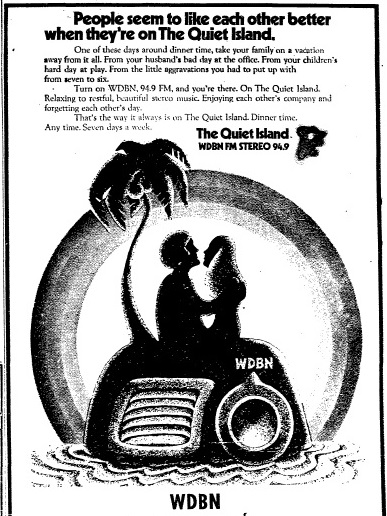
17 October 1960, Medina's own WDBN quietly debuted at 94.9 FM. There was no ribbon cutting ceremony. No fan fare. No headlines in the Medina Gazette. It was 1960 and FM radio stations were the "sad sisters" of AM radio.

This ad that appeared in the 15 Dec 1960 edition of the Orrville Courier
Crescent 
 was the earliest mention I could find about the station.


In a year when songs like "Cathy's Clown" by the Everly Brothers and "The Twist" by Chubby Checkers and "It Was an Its Bitsy Teenie Weenie Yellow Polka Dot Bikini" were on the top of the charts, WDBN was playing "beautiful music" - instrumental recordings of Montovani and Broadway tunes. No vocals.

Their target audience was adults. Music would last for 15 minutes and then there would be 2 minutes of commercials. 24 hours a day. Much of the programming was automated with staff only broadcasting the news.

But Ted Niarhos and his fellow investors must have had a crystal ball, because FM radio was just coming in to its own. Slowly, talk radio and news programs became the province of AM radio and music went to FM.

With a 188,000 watt transmitter, the station was the most powerful FM station in Ohio (or even east of the Mississippi). Providing a 50 mile radius listening area, people from all over north east Ohio could listen in. Later, the FCC would set wattage limits on FM stations, but WDBN was grandfathered in.

In 1961, the station provided the first stereophonic broadcast service in Ohio.

But it was early years yet for FM radio, and the station struggled financially. Especially after a fierce wind storm in February of 1967 blew down their tower and the insurance wouldn't cover the replacement costs. Once saved by advertisers & citizens of Medina County.

Medina Gazette 16 Feb 1967 p. 1. After a wind storm in February
 1967, the station transmitted on half power for six weeks
while a new 236,000 watt transmitter was installed.
After replacing the antenna, the station had better reception than ever, especially in the Cleveland area.

By 1966, Ted Niarhos bragged to BillBoard Magazine that the station had enough listeners to compete with AM stations for advertising dollars and it was #1 in their market, ahead of 20 AM stations.

Early in 1968, the FCC approved the sale of WDBN-FM to Robert Miller and his associated investors. The price? $1 million dollars! This was the highest price ever paid for a FM station at this time.

Because of a conflict of interest, Miller was also a part owner of WERE in Cleveland, Bob had to resign as officer of the Cleveland Broadcasting Inc and put his stock in that company into a irrevocable trust. The Miller family owned 34% of the Cleveland Broadcasting and Bob owned 46.57% of WDBN's stock, giving the Millers the controlling interest.

Miller was already known in broadcasting circles because of his involvement with WERE. He was the son of former Cleveland Mayor, Ray Miller and had interviewed Presidents Harry Truman and John F. Kennedy.

Meanwhile, Ted Niarhos moved to Florida and bought another radio station, but harbored fond memories of Medina. He still lives there.


Plain Dealer 12 May 1968 p. 168. Bragging: "#1 station in Medina, River Styx (where studio & transmitter are), Remson Corners & Barberton, Penninsula, Hudson. #2 with Akron adults. “Darn near tops in Cleveland”


WDBN acquired a number of nicknames during this period, among them, "The Miracle in Medina" and "The Quiet Island." While WDBN never stood for anything in particular, Bob Miller coined the term "Wonderful Days, Beautiful Nights" to describe the listening experience.

Plain Dealer 7 Nov 1973 p. 15


Plain Dealer 9 June 1971 p. 82
In 1971, the station was the first in Ohio to schedule broadcasts in four-channel stereo.

In  order to alleviate "holes" in their broadcast area caused by the hills and valleys of northern Medina and Summit counties, WDBN  revamped the transmission system in 1973. Previously, they had two 15,000 watt transmitters, one in River Styx and one in Guilford Township on Tower Road. These were replaced by three 25,000 watt transmitters and an improved antenna system that gave the station "America's most powerful transmitting system".

In 1975, the station attained a waiver from the FCC that allowed them to move their station offices from the transmitters at Tower Road in Guilford Township to Gateway Drive in Montville Township.

The station remodeled the studios in 1981 to provide cleaner brighter sounds.

Pam Miller, who was Program Director at the time of the 1981 remodel.
Medina Gazette 25 Nov 1981 p. 11.


Battle of Antennas

In 1982, the FCC approved WDBNs request to increase height of antenna from 300 to 700 feet & move it to Paradise Road in Montville Township. What seemed like a simple request at the time became much more complicated:
  • Believing the radio station is a public utility, Miller did not seek zoning permit from the township.
  • Montville Township officials sought an injunction as they opposed the move and did not believe that a radio station was a public utility. 
  • FCC said it was not clear if township officials have zoning authority over broadcast towers. 
  • Medina County Common Pleas Court Judge Neil Whitfield said WDBN could be considered a public utility and would not have to seek zoning permission from the township.
  • Montville Township Trustees appealed. 
  • The Appeals court sent the issue back to Medina County Common Pleas Court.
  • The Case went back to Appeals court & they ruled WDBN was not a public utility.
  • In 1984, WDBN said it will take its case to OH Supreme Court but later dismissed the case.
Picture of this promotional button provided courtesy of Max Grubb, who was the Account Executive  in the 1970's and 80's.

Meanwhile, also in 1982, the NAACP filed a discriminatory hiring case against WDBN and four other radio stations because no minorities worked at the stations. The group maintained that the stations' licenses should not be renewed. The NAACP said that hiring at the station should reflect the  employment pool represented by standard metro area of the broadcast area, which for WDBN included Cleveland and Akron, both of which had significant black populations.  The NAACP representative admitted that no one from their group had ever examined the company's employment records.

The Millers believed that the case was prompted by the publicity surrounding their zoning issues and their request for their license renewal. WDBN had had black employees in the past and had made efforts to employ black people. Over the years, they had offered jobs to several African Americans who had turned down the employment opportunities. The Millers blamed the station's rural location.

The American Legal Foundation, a conservative public-interest law group that fought inaccuracies in the media, came out in support of WDBN.

It was found that the NAACP case was misguided and contained no substance. WDBN's license was renewed unconditionally. The station made some adjustments to their hiring practices, like reaching out to Reverend Burton of the Medina Second Baptist Church,  to further encourage minority employment.

Photo of promotional mug provided courtesy of Max Grubb.

Because of the popularity of the station and in FM radio in general the station was experiencing windfall profits. With those profits, the Millers decided to broaden their market in 1985 by buying other radio stations. They bought WKSW-RM in Urbana in November and had plans on acquiring more Ohio Stations.

By 1985, WDBN boasted 250,000 listeners per week.

Deregulation of the industry in the 1980's made it much easier to buy and sell radio stations. The Millers received a great offer and sold WDBN in 1988 for 4.5 million to Thom Mandel.

The station changed to “adult Contemporary” format and became Mix 94.9  and the call sign changed to WQMX. The station moved east into Summit County.

WQMX switched to country format on Dec. 6, 1993 - “Akron’s Own Country”

SOME OF WDBN-FM'S FIRSTS:
  1. Pioneer FM stereo station – first in Cleveland Metro area & Ohio in 1961
  2. 1961 first stereophonic broadcast service in Ohio.
  3. Bought for $1,000,000 in 1968, highest price ever paid for a FM station at that time
  4. 1971 first in Ohio to schedule broadcasts in four-channel stereo.
  5. 1973 "America's most powerful transmitting system".


SOURCES:
  • Brewer, Mary Jane, “Public Servant Pamela Miller Gets the Job Done: Medina Local Legends” Cleveland.com, 20 Feb 2018, accessed: https://www.cleveland.com/medina/2018/02/local_legend_pamela_miller_ded.html
  • “MILLER, Raymond Thomas” from Encyclopedia of Cleveland History, Case Western Reserve University, accessed: https://case.edu/ech/articles/m/miller-raymond-thomas
  • "Robert McBride Miller" Akron Beacon Journal, 27 Aug, 2006 accessed on: www.legacy.com
  • "The Dividends of Automation" Broadcasting, 31 July 1967 accessed: https://www.americanradiohistory.com/Archive-BC/BC-1967/1967-07-31-BC.pdf 
  • Brack, Ray "FM Broadcasters Pain Bright Future" in BillBoard, 9 Apr 1966, page 30 accessed at: https://bit.ly/2Z1oEa0 
  • "$1-Million FM Sale Sets New High" Broadcasting, 15 Apr 1968, p. 46, accessed: https://www.americanradiohistory.com/Archive-BC/BC-1968/1968-04-15-BC.pdf
  • "VOX JOX" BillBoard, 18 Dec. 1965, p. 49, accessed: https://www.americanradiohistory.com/Archive-BC/BC-1968/1968-04-15-BC.pdf
  • "WDBN-FM", Cleveland Broadcast Radio Archives, accessed:  http://www.cleve-radio.com/index2.htm#WDBN-FM
  • "WQMX" WikiWand, accessed https://www.wikiwand.com/en/WQMX
  • "WQMX" Wikipedia, accessed: https://en.wikipedia.org/wiki/WQMX
  • "Top 100 Songs of 1960", Bob Borst's Home of Pop Culture, accessed: https://en.wikipedia.org/wiki/WQMX
  • Grubb, Max, interview with Kathy Petras via phone, 7 Aug. 2019. 
  • Miller, Pamela, phone conversation with Kathy Petras, 13 Aug. 2019.
  • "Bennet's Furniture advertisement" Orrville Courier Crescent, 15 Dec 1960, p. 14, accessed from NewspaperArchive.com. 
  • Medina County Gazette
    • "County Suffers Extensive Wind Damage", 16 Feb., 1967, page 1.
    • "Salmagundi" (editorial", 10 Jan. 1968, p. 2.
    • "Purchase of WDBM Approved by FCC", 12 April 1968, pp. 1 & 3.
    • "The Miracle of Medina WDBN", 26 March 1969, p. 3.
    • "WDBN At Half Power For Week", 15 Aug., 1970, p. 2.
    • "WDBN To Finalize Change of Location", 29 March 1975,p. 12.
    • "Anniversary WDBN Celebrates No. 18", 18 Oct. 1978, p. 25.
    • Long, Pam, "WDBN Upgrades Sound", 25 Nov., 1981 p. 11.
    • Long, Pam, "Court Battle in Making? WDBN Tower Approval Signals Fight", 22 Sep. 1982, p. 1 & 7.
    • Nofel, Pete, "NAACP Files Against WDBN", 29 Sep. 1982, p. 1.
    • Nofel, Pete, "Foundation Lends Support to WDBN" 9 Oct. 1982, p. 3.
    • Long, Pam, "WDBN Can Build Tower", 31 Dec 1982, p. 1 & 18.
    • "Montville Appeals WDBN Court Ruling", 11 Mar., 1983, p. 1'
    • Bailey, Steve, "Appeals Court: WDBN is Not a Public Utility", 2 Sep 1983, p. 1.
    • Bailey, Steve, "Montville, WDBN Fight On", 30 Nov. 1983, p. 3.
    • Bailey, Steve, "Appeals Court Nixes WDBN's Tower", 20 July 1984, p. 3.
    • Bailey, Steve, "Public Status WDBN to Seek Higher Ruling on Utility Claim", 26 July 1984, p. 1.
    • Bailey, Steve, "WDBN Drops Court Appeal", 26 Sep. 1984, p. 1.
    • Webb, Dennis, "WDBN Looking At New Markets", 12 Nov. 1985, p. A-1.
  • Plain Dealer
    • "Pendulum", 11 April 1967, p. 41.
    • "The Miracle in Medina", 12 May 1968, p. 168.
    • "WDBN, Medina's FM Voice", 9 Jun 1970, p. 80.
    • WDBN Advertisement", 9 June 1971, p. 82.
    • "The Struggling Years at WDBN Have Finally Paid Good Dividends", 22 May 1970.
    • "Medina's WDBN-FM Now Is Beaming More 'Structured" Adult Music", 16 Apr. 1972, p. 21-E.
    • Hart, Raymond, "WDBN To Improve Signal Next Week", 28 Mar. 1973, p. 39.
    • "WDBN-FM Stereo" advertisement, 7 Nov. 1973,p. 15.

Wednesday, June 12, 2019

LIGHTING UP THE TOWN, cont'd...

Medina Square Light posts. These decorative historic looking lamp posts were replaced in 2015.
Photo taken 12 June 2019.
The research into the history of bringing electricity to Medina continues as I scour the newspaper microfilm to tease out snippets of news on the topic.So far, I have browsed 2 ½ years of The Gazette, out of a possible of 6 years. My search has been concentrated on 1892, when we know the light and power scheme was first proposed, and 1897 when we know that the light company finally started operations.

Some interesting things I have learned along the way:

1. When the village of Medina first started talking about bringing electricity to the village, it was always only with the thought to light the streets and businesses and private residences. There was no thought to bring in electricity to power homes and businesses. And why would there be? In 1897, homes were not filled with electrical appliances as they are today. Businesses used gas powered motors and dynamos to power their machinery.

2. Strangely, the power company never seemed to promote itself. I have yet to find an ad.

3. Most of the Medina County news came in the form of “letters” or articles sent in by correspondents from each of the villages and crossroads of the area. But the village of Medina did not have a separate correspondent as it was the home of The Gazette. Its local news was in the Local News and Personals columns of the paper, that usually appeared on pages 4 or 5.

4. Medina Village Council meetings were generally not deemed worthy of news print.

5. Prior to electric lights, Medina Public Square was lit by gas lamps.

This ad for electric fans appeared in the
Akron Beacon Journal 23 July 1896 p. 4 


Here is a timeline of events, as I have been able to reconstruct them:

1892
  • 3 March – “Medina behind its neighbors” Mr Fred Bostwick of Thomson-Houston Electric answered many questions
  • 10 March – finances of electric light plant
This excerpt shows the estimated cost of the electric plant.
Medina Gazette 3 Mar 1892 p.4 
  • 10 March – a new stove plant in Medina is dependent on the light plant
  • 16 March  – Ohio legislature passed an act, that while it did not name Medina, targeted Medina specifically, to allow the village council to issue bonds and levy a tax for the purchase and erection of an electric light plant.
  • 17 March – editorial urging a yes vote for the lights
  • 31 March – “example” lights set up by AI Root plant and run by his dynamo
  • 7 April – slander is that village council members don’t pay taxes; lists taxes for T. Ferriman, J.S. Warner , W.H. Hobart, D. Hemmeter, W.B. Croft, R.S. Shepard
  • 7 April – Dr. S. Hudson writes letter criticizing the electric lights scheme as too precipitous (and by waiting they could save half the cost), too experimental, that the village already had capital improvement debts totaling over $20,000, and that streets and sidewalks should be improved first.
  • 12 April – new village council has a “Street Lights & Lighting” committee consisting of Hobart, Ferriman & Warner
  • 14 April – Vote on electric lights passed with 70% of the vote. AI Root workers and other factor workers marched en masse to polling booths.
Election Results Medina Gazette 14 Apr 1892 p.6 

  • 12 May – No electric lights this year; Herman Holmes filed suit against village council to prevent them from selling electric lights bonds; lawyer Spellman; be to be heard by Judge Nye (from Elyria)
  • 19 May – Holmes suit claims that the price quoted by village council $18000 was way too expensive and should be able to be accomplished for half that price; and that the legislation passed to allow the village to issue bonds and taxes was unconstitutional.
  • 21 July – J.M. Henderson, attorney for Village Council, asked to remove his previous filing and to be able to file a separate action by 15 Aug.; probably abandon of litigation & repeal of electric light ordinance recently passed by the Council; Medina will remain dark this coming winter.
  • NO OTHER ARTICLES COULD BE FOUND IN THE INTERVENING MONTHS
  • 22 Dec – Monies set aside in bank for the proposed stove factory sit idle because stove plant didn’t open because of NO ELECTRICITY.
1896 - October through December newspapers have been searched with no articles found mentioning the light and power company. However, 1896 was a very busy year:
  • Medina was building a new waterworks plant.
  • The Methodist Episcopal Church that was built in 1859 burned down. The women of church went into a flurry of fundraising.
  • There was a lot of discussion of the electric railways that were being proposed for Medina.
  • W.W. Pancoast, who had embezzled a great deal of money from the people of Medina, was arrested elsewhere on charges of murder. People followed his trial and sentencing closely.
  • The Gazette had a weekly column dedicated to the care, maintenance and proper use of the bicycles that had become very popular.
  • Several gentleman waged a war in the newspaper on whether bicycles should be allowed on the sidewalks.
  • William McKinley was running for President of the United States. As an Ohio man, and a Republican, The Gazette dedicated a great deal of space in its papers boosting and endorsing McKinley and vilifying his opponent, William Jennings Bryan. McKinley won and the paper crowed about the victory. After being elected to his second term as President in 1900, McKinley was assassinated in 1901.
1897 - The October through December 1896 and January and February of 1897 newspaper microfilm was scoured, but nothing mentioned bringing electricity to Medina. But... 
  • 13 March – Ozro Sanders granted franchise for erection of an electric light plant to be in operation inside of six months
Medina Gazette 11 Mar 1897 p.5
and from the big city paper...

Plain Dealer 13 March 1897 P.9

  • 8 April – Electric bells have been put up in both the recitation rooms at the High school building. Powered by what?
  • 22 April - attention to better street lighting; parties interested in obtaining a franchise at $1600-$2500 a year;deemed too expensive previous year spend $38 for lighting (from what source?); could add to water works; hope for Medina to enjoy lighting in the “not-distant time”
  • WHAT CHANGED? WHEN? 
  • 13 May – “when the electric lights brighten the streets (of) Medina”
  • 27 May “Medina is…putting in electric lights”
  • 27 May – Mrs. Sanders is purchasing materials; predict lights within 60 days; lot is purchase west of the N O depot; credit to Mr. O. Sanders for “taking hold” of this business for our town
  • 8 July – Chimney and foundation in place
  • 15 July – work of hanging the electric light cable was completed
  • 12 Aug – engine, pump, heater & separator in position for electric light plant; cementing the floor has begun; already have orders for 500 incandescent lamps & 20 arc lamps; lighting for new Methodist church in place
  • 2 Sep – dynamo arrived; expected that lights on during fair week
And finally...
  • 16 Sep – engine of Medina Electric Light and Power Company started up; eight business houses had been equipped with lamps 7 4 arc lights, one on each corner of the park, illuminated the streets; soon most of businesses 7 private residences will be lighted by electricity;
  • 30 “light there be light and there was light and the people rejoiced greatly”
Medina Gazette 30 Sep 1897 p. 5


1905 – Judge Fremont O. Phllips bought the Medina Electric light and Power Company

1915 – Company bought by Pennsylvania Power Company who sold it to Cleveland Southwestern Power Company who sold it to Western Reserve Light and Powere Company

1931 –Sold to Ohio Edison

And as much as I would like to track down exactly when Medina village council took up the lighting and power issue again, I cannot justify the amount of time it would take to do so.

By the way, Dr. Hudson, who wrote the article criticizing Medina for wanting to install an electric plant in 1892 was right about one item. The price for building and operating the plant had dropped by almost 50% when the council took up the plan again in 1897!

Sources:
Medina Gazette
Historical Highlights of Medina(1966)
"Beyond the Storefronts" Medina Square http://www.medinasquare.org/  by Bob Hyde
Medina County Coming of Age by Joanne King
Summit County Beacon 18 May 1892 page 8
Akron Beacon Journal 18 1897 p. 5
Akron Beacon Journal 23 July 1896 p. 4
Plain Dealer 13 March 1897 p.9

Friday, May 31, 2019

Lighting up the Town


Last week's post on Memorial Day in Medina featured a lot of pictures of the parades around the Square. There was a marked difference in the photos pre-1900 as opposed to after that date. Did you notice?

Medina Square 1889


Medina Square circa 1897


Do you see it now?


Sometime in the intervening years, Medina installed electricity. Didn't really impact last week's blog, but it put that little kernel of curiosity in my brain. Exactly WHEN did Medina get electricity?

{Some of the lines are also telephone lines.}

Bob Hyde's website Beyond the Storefronts is a great place to start off place when researching any  history surrounding the Medina Square. And since he installed a search function, VOILA! Anything I want to find, I can. And I did!

Bob had this picture of the Power Generating Station, and accompanying history about its location at 121 West Smith Road.


According to Bob:
"#121 West Smith Road:
Medina Electric Light and Power Generating Plant, Albert G. Oatman and Ozro Sanders, Props.   (1897-1905)
1.  Albert G. Oatman and Ozro Sanders under the company title of the Medina Electric Light and Power Company have erected substantial brick structure equipped with necessary machinery, power, and dynamos for supplying the town with arc and incandescent lights and power.
2.  The plant was put into operation on September 15, 1897 and already there are 800 incandescent lights supplied to stores, offices, residences and shops in the village.
3.  The rates in effect are reasonable and range from one to five lights furnished for 60 cents each, per month; from five to fifteen at 50 cents and from fifteen to twenty-five lights at 40 cents each, per month.
4.  The Company is equipped for furnishing arc lights for streets, but as for now no contract has been made with the village.  In a few places lights have been provided on a private subscription basis
5.  The plant is equipped with one K. W. generator, one 125 horsepower engine and one 150 horse power boiler, the largest in the town.
6.  Simon S. Oatman bought out A. G. Oatman’s interest in 1905.
Phillips Electric Generating Plant, Judge F. O. Phillips, Prop. (1905-1915)
1.  S. S. Oatman sold Medina Electric Light and Power on Lot 16 to F. O. Phillips for $14,000 in 1905.
Pennsylvania Power Co., Cleveland Southwestern Power Co., Western Reserve Light andPower Co. (1915-1931)
1.  Judge F. O. Phillips sold Phillips Electric to Charles A. Moore of Chicago in 1915.

So, from this information, it looks like Medina got electricity in 1897. 

The Medina Electric and Light Company West Smith Road
Circa 1900-1915
Bob's history on the short lived company seems pretty complete. But is it everything that can be found? Probably, because Bob is an excellent historian.

But to make sure that is ALL the information available about the company, I need to do more research. That is called due diligence.


This cutout is from the 1897 Sanborn Fire Insurance Maps, a database available from within the library. The earlier Sanborn maps, for 1885 and 1892, don't show any kind of power plant.The  Power Company, circled in red, is near the corner of Elmwood and Smith Road. It was there early enough that it could be included in the publication for 1897. But does it predate 1897??

Joann King's excellent book on 19th
century Medina County. 


Joann King, another excellent historian, wrote Medina County Coming of Age 1810-1900. And she has a lot more to say about the beginnings of electrical power in Medina:

"In Medina, council gave Ozro Sanders the first utility franchise to build an electric plant. Individual industries already had their own dynamos used primarily to power machinery, [A.I. Root was one such company] but this company was solely for the benefit of the private subscriber. Sander's first order was for 150 individual lights, 125 were to go into the Phoenix Block. In 1898, this company officially became Medina Electric Light and Power under the leadership of A.G. Oatman and Sanders. In one year, they had 800 light bulbs shining in offices, stores, and homes."  p. 471

It doesn't give the date that the council gave the franchise to Sanders, just the date that the company was named.

Later in the book:

"In 1892, the Ohio Legislature passed a bill allowing Medina Council to hold an election for the purpose of levying the residents 2 mils for electric lights... Voters approved the light plant 355 to 166." And in the next paragraph:

"O. Sanders started building Medina's first electric plant on the northwest side of town near the depot... Three months later he had 500 subscriptions for incandescent lamps and an order from the village for twenty arc street lamps. Medina Council installed four of those lamps in November..."

Slowly lights began to appear around town. In 1897, the Medina Electric Light and Power Company started its engine and nineteenth century life in Medina was a thing of reality."

It still isn't clear when Medina got electricity. Here is what we have learned:
  •  In 1892, the Ohio Legislature passed a bill so that city council could put a levy on the ballot for citizens to be taxed for electric lights. And the levy passed.
    • When did the Ohio Legislature pass the bill?
    • When did the citizens get to vote on the levy?
  • Ozro Sanders won the franchise to build the first electric plant. 
    • When did city council award the franchise to Sanders?
    • When exactly did he build the plant?
  • "Slowly lights appear around town" and then the power plant is turned on? What is powering those slowly appearing lights?
From this information, we can estimate that sometime between 1892 and 1897, the city of Medina generated enough electricity to power lights around town.

In order to pin the date down more exactly, more research was needed.

Question #1- When did the Ohio Legislature pass the bill that enabled Medina City Council to try for the levy?
Judy Russell, the Legal Genealogist, is always blogging about tracking down the original laws. She makes it seem easy. It isn't. But...

In the online Journal of the Senate of the State of Ohio, Volume 89, page 372, I found this:

The bill was read 2 more times.
"Mr. Strock" is Mr. Charles Strock from Niles in Trumbull County, Ohio.

"Tuesday, March 15, 1892.
H.B. No. 612 - Mr Strock (by request): To authorize the council of any incorporated village in the state of Ohio, which contained at the last federal census of 1890, or which at any subsequent federal census may contain a population of not less that two thousand and seventy-three nor more that two thousand and eighty-three, to issue bonds and levy a tax for the payment of the same and interest thereon for the purchase and erection of an electric light plant."

WHAT? Did you catch that wording? " population of not less that two thousand and seventy-three nor more that two thousand and eighty-three". That is a very specific size population, with only a 10 person difference. According to Wikipedia, Medina's population in 1890? 2,073. This bill, while not naming Medina specifically, targeted the town especially.


The bill passed the following day.

Question #2 - So, by mid March of 1892, Medina was permitted to put a levy on the ballot. But when did the election take place?

To find this information, I have been scouring the Medina Gazette newspaper microfilm. I have not found the date of the election, but I did find some more information.

Medina Gazette 12 May 1892, page 4.


So the Village Council had approved the tax by mid-May 1892, but Mr. Herman Holmes was not happy with their decision and was filing a lawsuit to stop them from going forward. Mr. Holmes was a Civil War Veteran and Medina business man. His main complaint was that the proposed plant was too expensive. Oh, and he didn't want any poles put on his East Liberty Street property.

Since the common pleas court only met every quarter, progress on the suit was very slow...

Medina Gazette 21 July 1892, page 1
So now we have narrowed the date that Medina got electricity from 1893 to 1897...

And just like the court case, this blog will have to be continued to allow time for more research...


SOURCES:
Beyond the Storefronts http://www.medinasquare.org/
Historical Highlights of Medina
Medina County: Coming of Age
Sanborn Fire Insurance Maps
Wikipedia - Medina census population
Journal of the Senate of the State of Ohio, Volume 89
Medina County Gazette