Thursday, March 8, 2018

New Beginnings..

It is nearly spring...


A time for new beginnings...


And a great time for babies!


A co-worker recently became a father for the second time - Congratulations, Dan & Katie!

This event inspired me to write about all the different ways we document the birth of a new child.

And of course, this means these are ALL the different resources we should be looking for...
  1. Early pregnancy test - Okay. This one is gross! I know, because my daughters told me so. But I actually saved the EPT stick from my second daughter. BTW, the color fades over the years. The "ick' factor can be eliminated by taking a picture of the test. Don't expect to find may of these.
  2. Gender reveal party - This is a relatively recent phenomenon, but it is possible that it is documented with invitations, photos, and a guest book.
  3. Ultrasound scans - Now, ultrasound scans are routine and expectant parents get copies to take home and share. First photo of baby? Probably an ultrasound.
4. Baby Showers - usually given shortly before the baby arrives, this tradition developed to help new parents defray the costs that come with a new baby. Invitations, pictures, guest books and possibly...

5. Baby books - Usually one of the gifts received at a baby shower, a Baby Book is an album just to document every moment of the young human's life. First food - listed. First BM -noted. Also includes a basic ancestry chart. Aunt Bonnie used to create quilted masterpieces.

Aunt Bonnie's quilted baby books are treasured heirlooms in our family.

6. Hospital pictures - These first photos are taken in the nursery in the hospital. Usually, you can purchase pre-printed birth announcements designed to hold these miniature photos.

Baby bracelet like the one pictured to below were used in the 1950's & 60's to make sure that mother & baby were correctly matched up when it came time to leave the hospital.

7. Hospital announcements - sometimes part of the "birthing" package at the hospital are paper birth announcements to send out to friends and family. Most hospital have moved to online pictures and announcements. Because of HIPAA and privacy concerns, most also require a password to access.

8. Mother's Certificate - a decorative birth certificate from the hospital. It is not an official government document and cannot be used in lieu of the official birth record. (see below)

While not official documents, Mother's Certificates can contain
information not found on the official birth certificate.

Did you know that footprints are also unique to the individual and can be used for identification?


9. Birth announcements - Commercial cards purchased and sent out by the parents.
10. Newspaper birth announcements - Aren't seen too often anymore, but local births used to be regularly published in the newspapers.

Birth announcements from a 1979 Peru, Indiana newspaper.
Privacy concerns have mostly eliminated such listings.
11. Birth record - The OFFICIAL birth record from the local government. In Ohio, it is registered with the local health department and the State Department of Vital Statistics. Did you know you can obtain a birth record for anyone born in Ohio after 1908 at your local health department? To learn more about how to do that, check out this BLOG POST.
12. Social Security Number - This should NOT be available for any living person. But you can often find a listing for deceased persons in the Social Security Death Index that is available on Ancestry Library Edition and FamilySearch.org.
13. Baptism/christening - These are ceremonial rituals of different religions. If the information is not in the family documents, you have to contact the church or parish where the ritual took place. 
Baptism records don't always give the date of birth, as this one does.
But prior to the government's requirement for official birth records, a
baptism record may be the closest you can find to a birth record.
14. Family Bibles - A family Bible that records all the births, deaths and marriages is a rare heirloom indeed. BUT, if all the handwriting is with the same pen and penmanship, it means it was filled out by one individual and probably not filled out at the time of the event. Then you are relying on the memory and accuracy of that one person.

These births were obviously all written at the same time by the same person.
IF that person was the mother, she would have first hand knowledge of the births.
But does she remember all the dates correctly?

Birth of  the first, second, or last child spurs some people's interest in researching their family's history; picturing sharing it with their children one day...

Babies are such a nice way to start people.  - American humorist, Don Herold.


Wednesday, February 28, 2018

Extra! EXTRA! Read All About It!

If you are geek like me, I have some exciting news!

The Medina Library has just purchased several Wadsworth newspapers on microfilm.


Masthead from the Wadsworth Enterprise


What?!? You're not thrilled!

Wait. You will be.

First, how can you not love using newspapers for historical and genealogical research?

In newspapers you can find information on your ancestors that you cannot find anywhere else. Sure, you can find birth, marriage and death notices. But you also find information about your ancestor's real estate sales, businesses (and the ads they put in the paper), out of town visitors, vacation plans, engagements and illnesses.

Portage Sentinel 24 February 1847, page 4.
William Tagg followed his father, James, into
the painting and glazing business.


Not too long ago, I found a notice where one of my relatives hosted the birthday party for his mother-in-law. It included a list of all the guests. A whole list of people that can now be added to my research plans.


And when I was researching my 3X great-grandfather, James Tagg, I found a notice of his attendance at a GAR reunion. It told how the gathering was entertained by his stories from his Civil War ServiceApparently, he was a storyteller. Who knew?

Excerpt from a larger article on the Reunion of the 91st O.V.I.
Gallipolis Tribune 1 August 1894, page 3.


Cleveland Plain Dealer 6 November
1929, page 7. Clara was running for
a seat on the Cleveland Board of
Education. It was a position she
held for the rest of her life.
To learn more about online sites to do newspaper searches, look at this BLOG POST from 2 September 2015.

Now, in Medina County, the type of news reported in the papers changed over time. The early papers, 1830-1866, mostly consisted of national and political news. Many of these early papers affiliated with a particular political party and their articles reflected a strong bias. But when you do find information on a ancestor or local resident, you cherish it even more.

Some, like the one below, can fill in the gaps for a period when vital records are scarce or nonexistent.

The Watchtower 1838.
The notice gives us George MCCORMICK's birthday
and his father's name. We know he was apprenticed
to Noah BRONSON, who was an early settler of
Medina and a judge from 1823-1830. We also know
that George is sprightly and active and that Noah did
not have a high opinion of George's father.

Around 1870, more articles on local events and people start creeping into the paper. This trend continued until about 1960. Papers from the 30s, 40s and 50s, are FULL of social events that list everyone who attended and often describe the food served and the clothes worn. These details help give us insight into our ancestor's lives - the best of reasons to get excited about newspapers!

And the Medina County District Library has never owned any of the Wadsworth newspapers on microfilm, until now.

Here is the list:

Medina Watch Tower – 1 reel
Sep 12, 1838-Apr 14, 1841
June 2 & 9, 1841
Aug 4, 1841-Mar 2, 1842

Wadsworth Enterprise
– 3 reels
May 4, 1866 to April 25, 1877

Wadsworth News Banner – 26 reels
Feb 3, 1910- Dec 29, 1955

Wadsworth News – 6 reels
Oct 30, 1920-Oct 6, 1932
Feb 23-Sep 2828, 1933
Nov 2, 1933 –June 29, 1944

Now, besides the fact that Wadsworth is one of three cities within Medina County, what can we get out of these films?

First, the Wadsworth Library has the obituaries in the Wadsworth newspapers indexed as part of the Ohio Obituary Project on the Rutherford B. Hayes Presidential Library and Museum website: http://www.rbhayes.org/  Access to more obituaries? That is always a good thing!

Next, imagine how my blog on the Wadsworth Coal Mines could be impacted by having access to these Wadsworth newspapers. The post would probably contain a lot more detail than I was able to glean from The Gazette.

AND...

The 1876 editions of the Medina Gazette have always been MIA (Missing In Action). This is critical for two reasons that come immediately to mind.
  1. 1876 was the American Bicentennial. As Medina is celebrating its Bicentennial, wouldn't you like to know how the county celebrated the first U.S. Centennial in 1876? Me too!
  2. 1876 was the year the H.G. Blake died and for years local historians (including myself) have searched for his obituary. If you want to know who Blake was, read this POST.
The Wadsworth Enterprise has its 1876 editions:

The Wadsworth Enterprise 19 April 1876, page 4.

NOW are you excited?  Me too!


Saturday, February 24, 2018

Gardener's Cottage


Sadly, one of the historic Victorian buildings on South Court Street is in danger of collapse.


236 South Court houses the Gardener's Cottage and early Monday morning, chunks of bricks fell off the back wall.


As the official news continues to develop, I will add additional links here.

WEWS coverage from 19 February:
Gardener's Cottage Partially Collapses

Gazette online from the 19th:
Building Partially Collapses

Picture of the back of the building from the February 21st Gazette  article.


Late Tuesday, officials said that the building could  be saved.
Gazette coverage from the 21st:
Building is Salvageable

On Wednesday, plywood was brought in to close off the front of the building so that traffic could be restored on South Court Street.


Back of the building on Thursday, February 22, taken from second floor of the
Medina Library. Photo courtesy of the author. You can see that some framing has
been added and tarps are being installed to keep the rain out.

The history of the building going back to the 1870's  can be viewed at the Medina Square website:
East side of South Court Street. Look for the address 246 South Court.

Brunswick Sun Times 22 February 2018


City of Medina Press Release:

The Medina Post 24 February 2018.

There have also been a lot of posts on Facebook about the building. Here is the business' FACEBOOK page.

February 28, 2018 - All covered up and waiting for the reconstruction to begin!

February 28, 2018 - taken from second story of the Medina Library.
Today's Brunswick Sun News:

Brunswick Sun News 1 March 2018.

Thursday, February 22, 2018

Medina's Tank Testing Ground

In the midst of the Cold War, America was ramping up their military strength. Part of the that buildup was producing bigger, faster, better tanks. And what is now known as the IX Center, was in the 1950's, the site of the GM Cadillac Tank Plant, charged with building M41 Walker Bulldog tank.

M41 Walker Bulldog Tank built at the Cadillac Tank Plant 1951-1954.
Photo courtesy of Wikipedia. 
While the tank was under production, GM needed a place to test the tanks that would reflect the rough areas they would need to travel during war conditions. An area near the Hinckley-West Richfield border was just what the company needed.

In February 1951, Cadillac announced that the location, just off State Route 303, was ready for use and already had a tank on site. Called the Cadillac Ordnance Proving Ground, the site had everything needed to give the tanks a good work out: hilly terrain, deep ravines, switchbacks, dense brush and water hazards. Two test courses were designed to replicate field conditions.

1958 Aerial Photograph depicting the Tank Proving Grounds.
The spring rains were particularly effective in testing the tanks', and the drivers', abilities to maneuver through the muddiest conditions, as illustrated in this photo from the April 30, 1954 edition of The Medina Gazette.


Medina Gazette,  April 30, 1954, page 1.
The Army ceased production of the Walker Bulldog in 1955. A few years later, GM Cadillac turned over the tank plant to its Allison Division. They produced the M-551 Sheridan tank until 1972.

Tank workers depicted in the December 3, 1965 newsletter for the Allison Division, called AllisoNews.
They continued to use the Proving Grounds near Hinckley until 1970.

AllisoNews photo of the proving grounds near Hinckley.
By December of 1970, the Army had abandoned the site. Hinckley and Richfield Township officials worked together to obtain the land. It took until 1978 for the federal government to donate the land for recreational use.

Named "Rising Valley Park", the two townships jointly operated the park from 1978 to 2005, when they decided to terminate the cooperative agreement. 44.7 acres went to Richfield and 188.3. acres became part of the Cleveland Metroparks.

Rising Valley Park in Richfield Township.

Rising Valley Park in Cleveland Metroparks.


You can almost see the outline of the old tank testing grounds in this Google image.

I see a field trip in my future!


SOURCES:
Aerial Photos - 1958- 1V- 169 in the Medina Franklin Sylvester Room Collection
AllisoNews Newsletter Vol. XXV, No. 12, 3 December 1965, pages 1-2.
Cleveland Metroparks - Rising Valley Park.
Google Maps
IX Center History
Medina County Gazette
      "Hinckley Interested in Cadillac Grounds", 1 December 1970, page 1.
      "Hinckley Park Dubbed Rising Valley", 13 April 1978, page 1.
      "Tanks Get Mud Baptisms Near Hinckley", 30 April 1954, page 1.
      "Test Tanks at Hinckley", 27 February, 1951, page 1.
Richfield Township - Rising Valley Park
"M41 Walker Bulldog Tank" Wikipedia

Thursday, February 15, 2018

Wadsworth Coal Mines and Strike Breakers

Coal was discovered and mined in Wadsworth Township as early as 1829. With the advent of train transportation, it became more profitable to extract the coal and starting in the 1850's coal mines popped up all over the area.

One of the largest and most profitable of the mines was Silver Creek mines, owned by Erastus Loomis. Occasionally, the miners would go out on strike to pressure the owners to improve wages or working conditions. It was a common practice for the owners to bring in outside workers to take the striking miners' places. It was a cutthroat practice and it was effective.

Map from Rogues Hollow History and Legends by Russell W. Frey
showing the Silver Creek Mines (with red triangle)


In 1880, the Wadsworth mine owners decided they would only pay the miners for the coal chunks that were a certain size. So they started screening each load of coal. The miners were not paid for anything small enough that it passed through the screen. The miners were being paid 50 cents per ton and they were expected to bring a certain tonnage of coal to the surface everyday. If they didn't meet their quota they would be considered a substandard worker and subject to being fired.

Does this mean the owners threw out the smaller coal? Most certainly not! Smaller coal was still fine for home use and it would have been sold.

The miners were incensed!  They were already being paid as little as .50 to $1 per day for the back breaking and dangerous work. Now part of their labors weren't even going to be measured! And the owners were making incredible profit! So they went out on strike!

In her book, Medina County Coming of Age 1810-1900,  historian Joann King says that the strike started on April 14th of 1880. Curiously, I could not find any newspaper articles from that date about the strike. The Medina Gazette was silent on the topic, until later in the year.

But as during past strikes, Erastus Loomis was looking for workers to take the place of the striking miners. However, he couldn't find enough workers locally. So he combed the black communities of the south. Soon, 200 Black men were unloaded from the train cars to work at the mine. Most were from Virginia.

As they would have with any strike breakers, the miners threatened the Black men. Loomis responded by housing the men, and their families, behind a stockade.

14 May 1880, page 7, Medina Gazette

The county Sheriff called for help and Cleveland sent 25 deputies. When the threats continued, the Ohio Militia was sent to protect the strike breakers.

14 May 1880  Medina Gazette, page 7


In June, the strike was still on,  and the Black miners appreciated the presence of the Militia, believing their very lives depended on the soldiers.

Medina Gazette 4 June 1880, page 7.

Within two weeks the strike was settled and the miners went back to work. The militia was sent home.

Medina Gazette  18 June 1880 page 7
True to their word, after the militia left, a number of the Black miners also left. But a number stayed and settled in the Wadsworth area. Over the years, more strikes occurred and and more strike breakers were imported. And so more Black people settled in the Wadsworth area.

A survey of the 1900 Federal Census for Wadsworth Township, shows of the 57 Black males living in the township, 35 were of working age. 27, or 3/4 of those men were miners.

Around this same time, the children of the Silver Creek Black miners, were being taught by a "A colored woman from Massillon." (Joann King, Medina County Coming of Age, page 407).

Soon after the families settled in, a Baptist Church was organized. Now known as the First Baptist Church, they hold annual reunions.

Descendants of the Black coal miners first gathered in 1993.
Sun Banner Pride, 2 September 1993.
Sun Banner Pride 10 August 2000


SOURCES:
Medina County Coming of Age 1810-1900 by Joann King
Medina Gazette:
      16 April 1880, page 7
      14 May 1880, page 7
      28 May 1880, page 2 and 7
      18 June 1880, page 7
 Remembering Wadsworth  by Caesar Carrino
Rogues Hollow History and Legends  by Russel W. Frey
Sun Banner Pride
     2 Sep 1993
    10 August 2000
Wadsworth Center to City Eleanor Shapiro, editor
U.S. Federal Census through Ancestry LE

Wednesday, February 7, 2018

Black History Month

February is Black History Month...


To commemorate it, the Medina Library has a display recounting some of the highlights from 200 years of Black History in Medina, including:
  • The Philips family, the first documented Black family in Medina County.
  • The influence of churches on the Black community.
  • How industry has spurred Black people to move to Medina County.
  • Some of Medina County's Black Community firsts.
Julia Williams lived in Wadsworth,. Born a slave, her story
was captured in 1937 as part of the Slave Narrative project.
Stop in to see the display to learn more about Medina's Black History.

Medina County and City are celebrating and commemorating with these events:
One of the stops in Medina on the Underground RailRoad.

New to the Medina Library!


929.5 NEI
The Family Tree Cemetery Field Guide  - How to Find, Record & Preserve Your Ancestors' Graves by Joy Neighbors. There is a LOT of great information packed into this little book.

Burial records can contain so much more information than just the name and date of death of the deceased:

  • Children who died young without birth records and never made it to the census records.
  • Multiple spouses.
  • Military or fraternal affiliations.
  • Who paid for the burial
Check out this book to learn the history of cemeteries and the types of records associated with burials. Includes where to look for records, online resources and how to integrate the information into your family history.

Wednesday, January 31, 2018

EPIDEMICS

It is winter in Northeast Ohio and that means the flu is in full force.

Is it an epidemic?

According to Dictionary.com an epidemic is: "a temporary prevalence of a disease."

In the United States, the Center for Disease Control (CDC) 
decides if a disease has reached epidemic proportions.

On January 12th, the CDC declared that flu had reached epidemic level in the U.S.


Flu activity from the Center for Disease Control
dated 20 January 2018.


While a major inconvenience to many of us, the flu will prove fatal to some. 
In today's Medina Gazette, the Medina Health Department said there have been 10 deaths due to the flu, so far this season.

Which leads us to epidemics of the past.

Most of us have wandered the rows in cemeteries and paused when we see family members who have all died around the same date. "What happened here?", we wonder.

Oftentimes, what has happened is an epidemic.

Epidemics have been around for millennia. This Wikipedia article traces epidemics back to the 5th century, B.C. 

Since most of us cannot trace our ancestry back that far, today we will look at the epidemics that have plagued Medina County in the last 200 years.

MEDINA EPIDEMICS


 1833-34 Asiatic Cholera - It is thought that it arrived from Europe with immigrants. Rufus Ferris died as a result of trying to bring treatment to prisoners at the Ohio Penitentiary.
1839-40 Dysentery - this is extreme diarrhea caused by eating contaminated food or water. Often caused by inadequate sanitary conditions around outdoor toilets.
1853-54 Dysentery
1852 - Small Pox
1855 - Variolia *(Small Pox)
1843-44 Malignant Erysipelas* This disease afflicted Wadsworth Township people very hard.
1848 - Malignant Erysipelas*
1850 - Measles (from mortality schedule)
1859 - Diptheria
1863-65 - Cerebro-spinal meningitis
1900-1915 – Typhoid Mary  - Luckily, Mary did not work or travel further east than New York. But hers is an interesting case to look at.

Mary Mallon, also known as "Typhoid Mary" carried typhoid fever 
wherever she worked as a cook. Once she was identified as the carrier,
she refused to stop working and changed her name. She probably
infected hundreds and caused the death of as many as 50 people.
Only once she was quarantined did she stop infecting people.
Photo courtesy of WikiCommons.

1916 - Polio
1918-1919 - Spanish Flu - Started during World War I and spread quickly by troop movements. Had a devastating impact on everyone.

Medina Gazette article from 18 October 1918 showing three Medina soldiers deaths from Spanish Flu.
Schools closed and businesses shut. Even the draft board suspended the draft until "the epidemic has been stamped out."


1952 – Polio
1962-1965 – Measles
Nowadays, an epidemic often results in the development of a vaccine. As this 1969 Gazette  article shows, it can take years to create the cure.

Medina County Gazette 19 August 1969, page 2.

1981- Present – AIDS
1989-1991 - Measles
2009 - H1N1 virus
        
*Variolia is another name for small pox and erysipelas is a contagious skin infection.

Luckily, with modern sanitation and the use of antibiotics, many of the above listed diseases are things of the past.


SOURCES:

FLU MAPS Center for Disease Control
Ohio History Central
Cleveland Influenza
Cholera
History of Medina County and Ohio  (1881)

Wednesday, January 24, 2018

Kathy Squared...

Kathy Staufer
Medina Library Teen Library Associate

In 2017, Kathy Stauffer joined the staff at the Medina Library Adult Reference desk. Kathy S. has been kicking around the MCDL library system for 16 years, working at the Lodi Branch, leaving for awhile to pursue her art,  returning to work at the Seville Branch, moving to the Lodi Branch and now, she is here in Medina.


Kathy is a wonderful addition to our Teen Department staff with her low-key personality and artistic talents. Besides our first names, we share a number of traits: premature grey hair, and fair coloring. Which means we have similar wardrobes and often show up to work similarly dressed. We share similar interests. We are about the same age. And of course, we work at the same place.

Eliza Stauffer's tombstone is broken into three parts.
Old Cemetery, Rootstown, Portage County, Ohio.

One day, I mentioned to Kathy that I have Stauffer's in my family tree, too. Back in 1850, my 4 X Great Aunt, Eliza Tagg, married Lewis Stauffer in Portage County, Ohio. She died in 1852, and I have not been able to trace Lewis Stauffer after that to see if she had given birth before dying. Spellings of the Stauffer name often vary according to the record - I was not put off by the different spelling.

Kathy was not particularly impressed with the connection.

But then she pipes up with "My husband isn't really a Staufer anyway. His father was born with Grandma Julie's first husband. But when she remarried, her second husband, Felix Staufer, adopted both of her sons and so their names changed to Staufer." She related the story of how the younger son died in an train accident. Grandma Julie told Kathy that her first husband's name was Miller, but Kathy's husband said that wasn't right and gave Kathy his biological grandfather's true surname, which Kathy couldn't remember.

And that is all it took for me to start researching the family. Kathy S. was unclear on specifics and I wanted to know more about the train accident.

1934 Cleveland Ohio Directory
From Ancestry Library Edition
 A couple of quick searches on Ancestry LE and the Familysearch.org website turned up some entries in the Cleveland City Directories for the 1920's and the younger son's death record - from an automobile accident. But strangely, nothing was turning up in Census records.

Robert Staufer's Ohio Death Certificate, dated 14 May 1933.
Ohio Deaths 1908-1953 at Family Search.

Digging a little deeper, I searched the online index to Cuyahoga County Marriage Records for Grandma Julie and found it.

Marriage record of Grandma Julie and Felix Staufer, showing her first husband's surname.
Ohio County Marriage Records 1774-1993 from Ancestry Library Edition

And voila! Grandma Julie's first husband's surname was ---- Petrash - a Slovak surname which has been Americanized to Petras in my in-laws branch of the family.

So, if Felix Staufer had not adopted Grandma Julie's two young sons, we would be...

Kathy Petras2


Kathy Petras and Kathy Petras or Kathy Petras


Isn't a weird and wonderful world that we live in??

Wednesday, January 17, 2018

Medina County History Fair at the Medina Library

Calling all Medina County History geeks!

On Saturday, January 27th seventeen different Medina County historical and genealogical societies will be hosting tables at the Medina Library for the 3rd annual:

Get a peek at all the unique, quirky, interesting and historical artifacts and trivia about Medina County from 17, count em', that's seventeen different groups. (Bet you have never heard of some of them!)

For the city of Medina, the focus this year will be on Medina's Bicentennial. Meet with Roger Smalley and get a preview of all the great events that are planned for Medina's 200th Birthday.

Or stop by the table for the Northeast Ohio Railway group and see some of the equipment that was employed on the area's railroads.

Meander over to the Medina County Historical Society and see what items Tom Hilburg has brought to share. Do you know what each was used for?

Remember, Saturday, 27 January from 11 a.m. to 3 p.m.

See you there!

(Yes, the Library will host a table that tells how we can help you with your research!)

Wednesday, January 10, 2018

Gretna Green

Recently I was reading the newsletter from the Trumbull County Genealogical Society (thank you Theresa Brown!) and discovered an article on "Marriage Mill" towns.
As "responsible adults", blacksmiths conducted marriage ceremonies
in Gretna Green.  It is still a popular  custom to get 
married "over the anvil" 

According to Merriam-Webster, a
marriage mill is "a place where it is possible to marry with a minimum of formality or delay"

Historically, Gretna Green in Scotland was supposed to be the first and the most famous of the "Marriage Mill" towns.  It is believed that it started with Lord Hardwicke's Marriage Act of 1754 which made the marriage laws of England and Wales more restrictive than the laws of Scotland. In Scotland, males as young as 14 and girls as young as 12 could get married without their parents' consent.  They just needed to declare their intentions in front of a responsible adult. So, it allowed for anyone to conduct the ceremony as long as there were two witnesses.

The United States has its share of "marriage mill" towns too, though none as famous as Gretna Green. Greenup, Kentucky, right across the Ohio river where my father's family lived was a very popular marriage destination for Ohio elopers. And I have heard from various genealogical resources, that Ashtabula once was popular.

One of the many wedding chapels in Las Vegas. This one specializes in
weddings officiated by Elvis Presley

Basically, any town on the border with a state that had more restrictive marriage laws could become a "Gretna Green." Some locations played up their reputations offering package deals that would include meals, flowers, rings and in some cases, a motel room.


The article went on to list these marriage mill towns:
Arizona  - Yuma
Arkansas - Marion, Crittenden County
Idaho - Coeur d'Alene
Indiana  - Angola, Crown Point, Jeffersonville
Iowa  - Nashua in Chickasaw County
Kansas  - Belleview, Johnson County
Kentucky - Greenup
Maryland - Chesterton, Elklton, Rockville, Garrett, Hartford, Howard, Kent
Minnesota - Moorhead in Clay County, Waukegan in Lake County, Winona County
Missouri - Liberty, St. Charles
Mississippi - DeSoto
Nevada - Washoe County
New Mexico - Curry County
New York -  Harrison County
 Ohio - Bowling Green in Wood County
Okahoma -  Love County (maybe just for the name?)
Virginia -  Alexandria, Fairfax, Arlington
Washington-  Clarke and Skamania Counties
West Virginia -  Wellsburg, Brooke County (though I have found a number of West Virginia relatives who went upriver to Gallia County, Ohio to get married)

So if you are having difficulty finding a marriage record for your research, consider that hey may have headed towards a "marriage mill" town...

Map of Marriage Mill Towns

Map of Marriage Mill Towns from FamilySearch's Wiki

Thursday, January 4, 2018

It's All Relative


It’s All Relative Adventures Up and Down the World Family Tree by A.J. Jacobs, author of The Year of Living Biblically. I had not read any of Jacobs’ other books, but this promised to be a lighthearted look at genealogy and it did not disappoint. Jacobs is NOT a genealogist and doesn’t pretend to be. What he is is an author who becomes obsessed about a particular idea and then he writes about it. He became obsessed with the idea that we are ALL basically cousins after discovering the web site geni.com and its goal of hosting a World Family Tree that will prove that we are all related on some level. (A global version of 7 degrees of Kevin Bacon.)

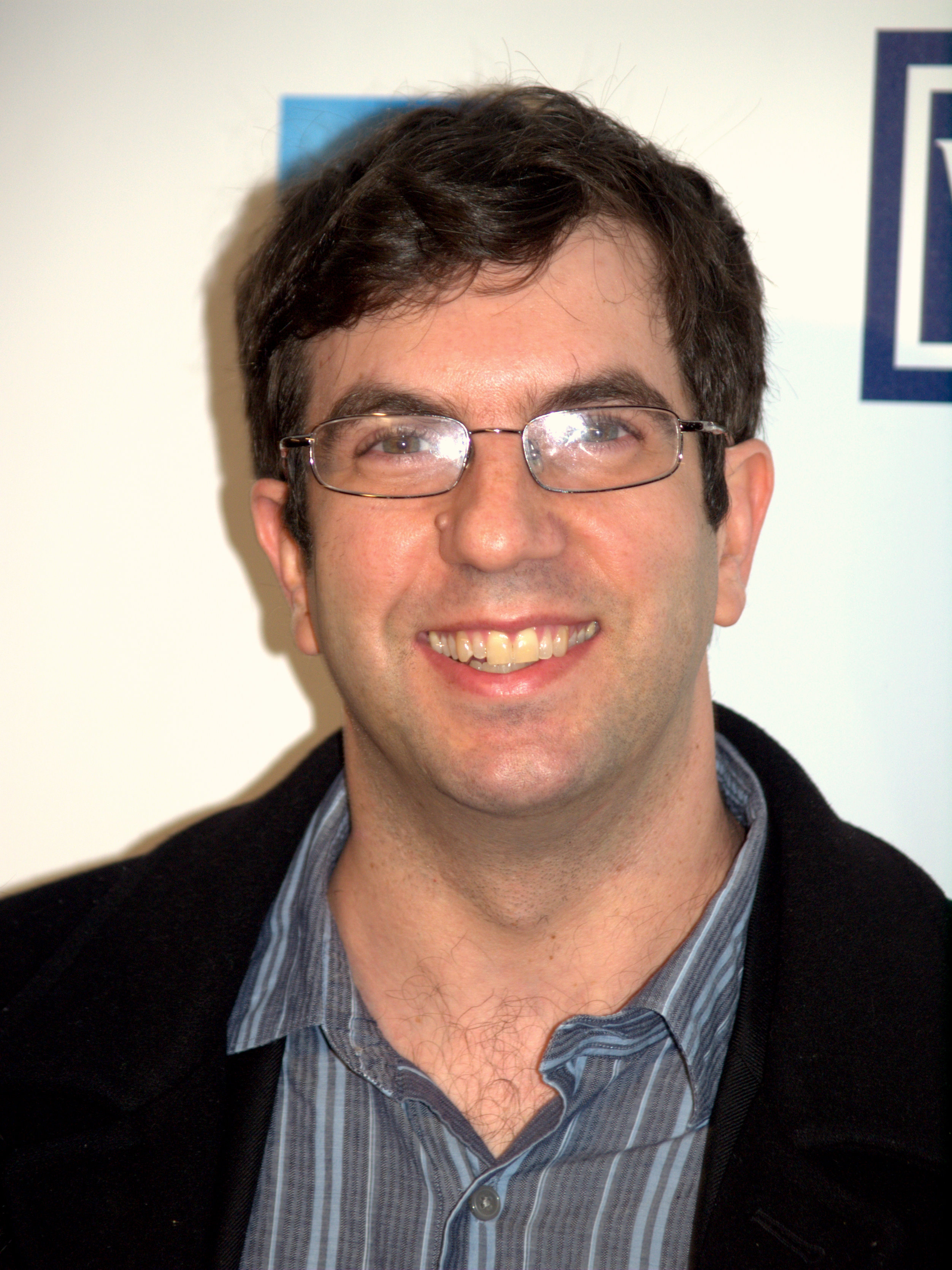
Author, A.J. Jacobs.
Photo courtesy of Wikimedia. 


Jacobs hope is that by proving that we are all related, that the individuals of the world will treat each other better. A noble if somewhat optimistic hope. (It presumes that we all treat our families nicely.) Toward that recognition, he wanted to host the world’s biggest family reunion in New York. He gets sponsors and co-hosts and enlists celebrities to participate, hoping to surpass the current Guinness World Record holders, the Lilly family of West Virginia. (I wonder if they are related to my Lilly’s??)

Each chapter counts down the progress towards the reunion, The Global Family Reunion. While the book is lighthearted and very entertaining, you don’t want to read it as any kind of genealogy how-to. It isn’t that, although the 15 page Appendix does cover the basic how-to’s. But amidst all the chuckles and smiles, Jacobs included some profound and thought provoking insights. Here are the ones that struck me:
  1. Being a genealogist is “a bit like a creepy voyeur.” (p.27) I have been accused of this on more than one occasion by my relatives.
  2. While Bruce Feiler’s book The Secrets of Happy Families extols the benefits of children knowing their family history, the MOST beneficial stories are the ones that show that the family has had hard times, but made it through because they “stuck together as a family” (p. 50)
  3. Neil deGrasse Tyson, astrophysicist and host of Cosmos had to say this about about tracing one’s ancestors: "My philosophy of root-finding may be unorthodox. I just don’t care. And that’s not a passive, but active absence of caring. In the tree of life, any two people in the world share a common ancestor -- depending only on how far back you look. So the line we draw to establish family and heritage is entirely arbitrary. When I wonder what I am capable of achieving, I don’t look to family lineage, I look to all human beings. That’s the genetic relationship that matters to me. The genius of Isaac Newton, the courage of Gandhi and MLK, the bravery of Joan of Arc, the athletic feats of Michael Jordan, the oratorical skills of Sir Winston Churchill, the compassion of Mother Teresa. I look to the entire human race for inspiration for what I can be - because I am human. Couldn’t care less if I were a descendant of kings or paupers, saints or sinners, the valorous or cowardly. My life is what I make of it." (p. 163)  I get this. We make decisions for ourselves that profoundly affect our lives. But I also believe that patterns and traits do get passed down from our families. And knowing what these are or were, helps us to better prepare ourselves for challenges Or as Oprah said, knowing what her slave ancestors endured made her better able to take on obstacles in her own life. 
  4.  And on the next page, Jacobs talks that while he sees Tyson’s point of view that we should view all of humanity’s achievements as inspirational, because after all we are all related, he goes on to say that he is “drawn to my own specific line of ancestors” believing that this is a common trait. And “It’s motivated me to research history that I otherwise might have ignored. It’s allowed me to feel more connected to the rest of the world.” (p. 164)
  5. Native American idea of 7 generations. Chief of the Onondaga Nation, Oren Lyons explains this concept: “We are looking ahead… to make sure … every decision we make relates to the welfare and well-being of the seventh generation to come…” (pp. .165-166)
  6. Talking about the genealogy TV shows and in answer to the shows critics about the unrealistic expectations viewers get from the shows, Jacobs says “They spark interest in our geeky pastime. They inspire people to trace their own pasts. That’s my hope for my paradoxical quest as well… That the celebrity angle will hook my distant cousins on family history, but that they’ll soon realize their non-famous ancestors are just as fascinating.” (p. 222)
  7. On feminism and the unequal interest in female ancestors, Judy Russell (aka The Legal Genealogist) is quoted as saying, “If the Dutch had won North America instead of the British, women would be a lot better off. The seventeenth century Dutch were far more liberal than the English, The Dutch allowed women to own land, open businesses --- everything except vote. There were actually two kinds of marriage, one where they retained their rights and on where they forfeited them” And Jacobs continues, “(By they way, the phrase “going Dutch” is not related to Dutch marital feminism, though it should be.” (p. 232)
  8. “Family Heuristic” - the idea that evolution has trained humans to treat family members better in order to preserve the common DNA. Jacobs believes that if you think everyone is your cousin, you should want to treat them ALL better. Perhaps this is the secret to the survival of the human race. (p.236)
I highly recommend this title to fans of Jacobs' other books, genealogists who can laugh at themselves, and anyone who wants a laugh. Pick up the book to find out about the Global Family Reunion.